
2026-08-20 · Mike Thornton
Keeping Stored Grain Free of Weevils in Small Farm Bins
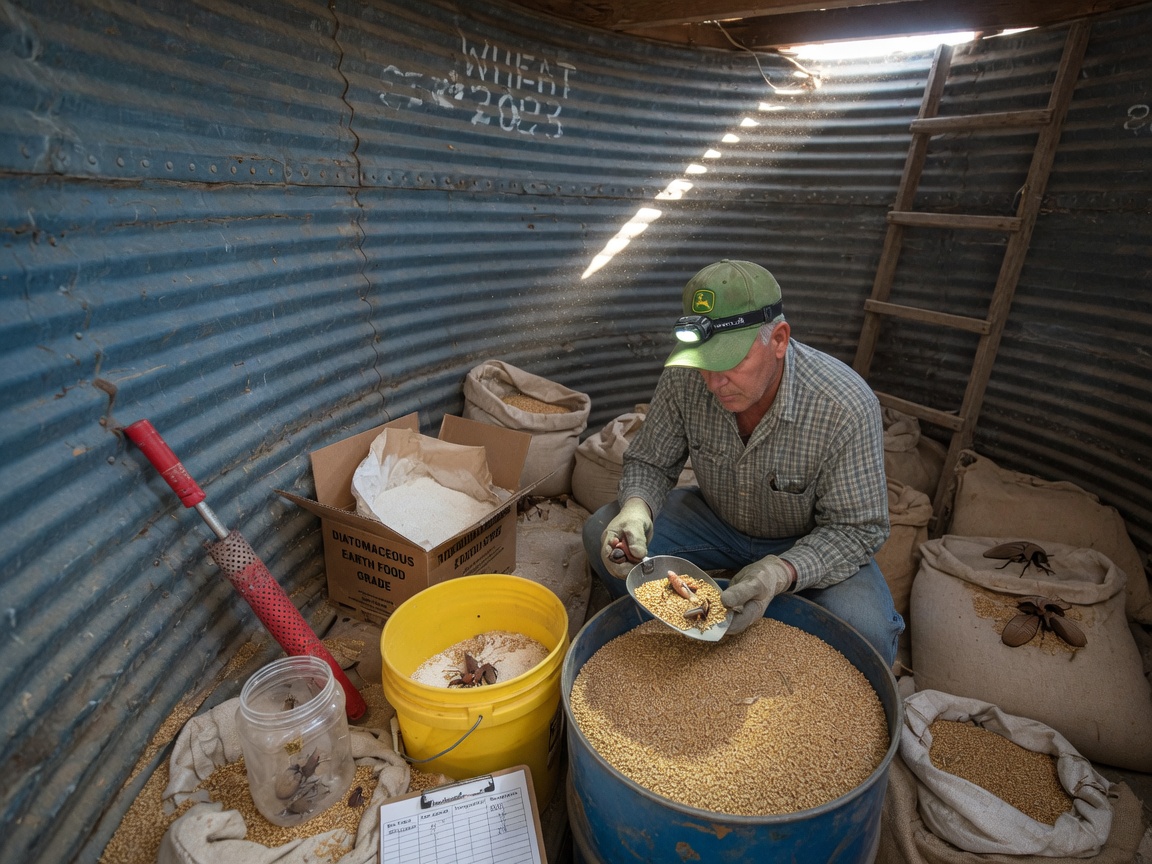
Effective weevil prevention in small farm bins near Ingalls begins with emptying and cleaning every bin to remove old grain residue, then loading only dry grain at 12-13 percent moisture while monitoring for temperature spikes above 60 degrees Fahrenheit. Gray County farms face hot summers that accelerate insect activity and cold winters that can mask early problems until spring, plus frequent thunderstorms that raise humidity around storage sites. These conditions make consistent inspection essential for bins holding wheat, corn, or sorghum on local properties.
Preparing Bins Before Storage
Empty bins completely and sweep out all fines, dust, and broken kernels that serve as weevil food sources. Pressure-wash walls and floors, then allow full drying before applying a labeled bin treatment if needed. Check aeration fans and ducts for blockages that could create warm, moist pockets once grain is added. In Ingalls, where many small bins sit exposed to summer heat, sealing cracks around doors and vents with caulk or tape stops adult weevils from entering from nearby fields or older farm structures. Perform this work at least two weeks before harvest to avoid rushed decisions.
Managing Moisture and Temperature
Keep incoming grain moisture at or below 13 percent and cool the mass to 50-55 degrees Fahrenheit within the first month of storage. Use aeration fans during cool nights common after Gray County thunderstorms to pull down temperatures without adding humidity. Install cables or portable probes at multiple depths to track readings weekly, because a 5-degree rise often signals early weevil activity before visible adults appear. Hot summer days can create temperature gradients that drive insects upward, while winter cold slows them but does not eliminate hidden populations. Record weekly readings in a simple log to spot trends before they require treatment.
Spotting and Responding to Early Signs
Look for live weevils on the grain surface, fine dust near bin vents, or a musty odor during inspections. If numbers exceed two insects per scoop sample, consider aeration adjustments or a labeled grain protectant applied at labeled rates. Farms near Cimarron often coordinate with neighbors to treat multiple bins at once for better coverage. Avoid mixing new and old grain lots, which spreads infestations quickly. Protecting Garden Beds From Grasshoppers Near Ingalls shares similar monitoring habits that apply to grain storage as well.
Long-Term Storage Practices
Turn grain or run aeration every 4-6 weeks during the first three months, then monthly through winter to maintain uniform conditions. Install rodent barriers around bin legs to reduce secondary damage that lets weevils enter. Older Ingalls farmhouses nearby often share the same storage challenges, and Sealing Attics Against Bats in Older Ingalls Farmhouses outlines sealing techniques that also help protect bin roofs. Schedule a site visit with Pest Management Solutions at 106 Finney Ave, Ingalls, KS 67853 during Mon–Fri 8am–5pm hours for hands-on assessment of specific bin setups.