2026-08-20 · Mike Thornton
Sealing Attics Against Bats in Older Ingalls Farmhouses
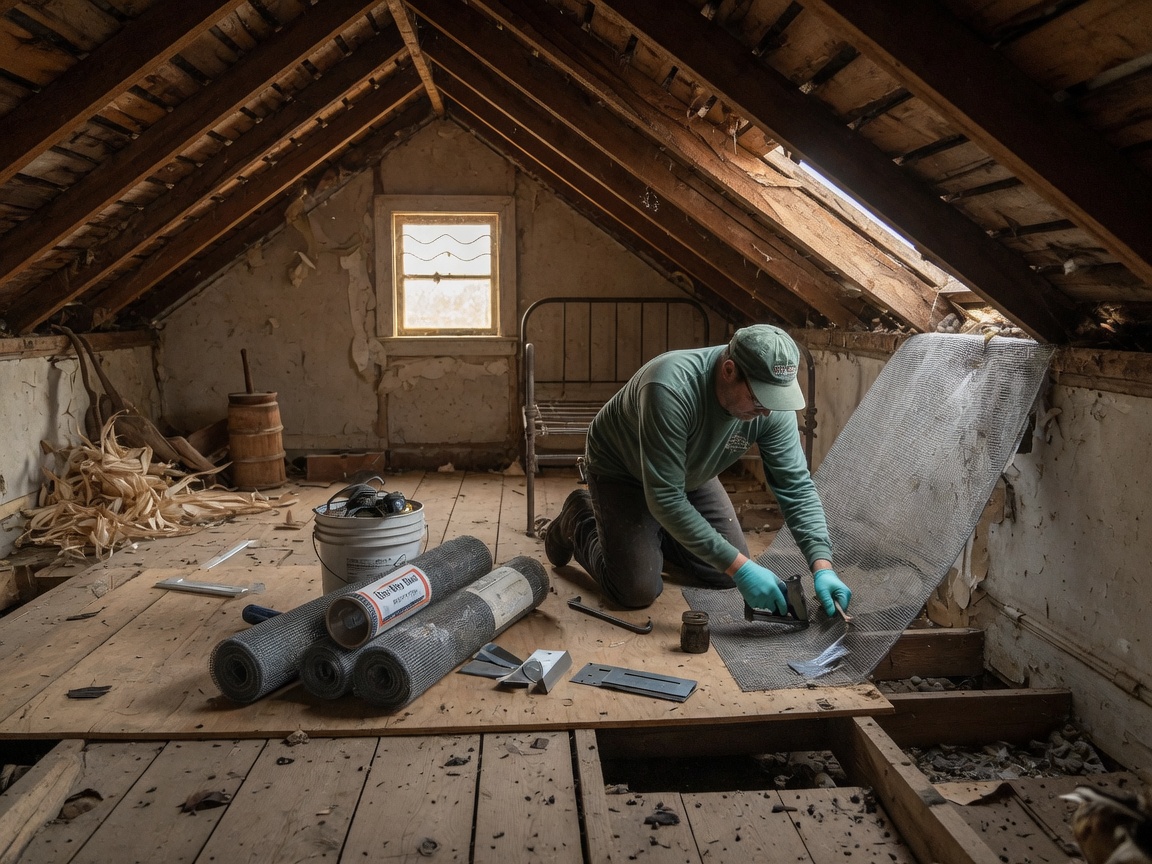
Sealing attics against bats in older Ingalls farmhouses starts with locating gaps as small as 1/4 inch around eaves, vents, and rooflines, then installing exclusion devices that prevent re-entry while allowing bats to exit. These homes, common throughout Gray County, often feature original wood siding and uninsulated attics that expand and contract with hot summers and cold winters, creating new openings each season. Frequent thunderstorms add moisture that can degrade temporary fixes, so durable materials become essential for long-term results.
Why Older Ingalls Farmhouses Attract Bats
Farmhouses built before 1950 in Ingalls and nearby Cimarron typically have loose shingles, unsealed soffits, and chimney gaps that bats exploit for roosting. Gray County’s mix of open fields and shelterbelts provides abundant insects for foraging, drawing little brown bats and big brown bats into attics during spring and fall migrations. Hot summers drive bats indoors for cooler daytime temperatures, while cold winters push them toward insulated spaces. Thunderstorms can dislodge existing seals, reopening access points. Homeowners often notice droppings near ridge vents or hear scratching at dusk. Addressing these patterns requires focusing on the specific construction details of local farmhouses rather than generic exclusion kits.
Locating Entry Points in Gray County Structures
Begin inspection at dusk from the ground, watching for bats emerging from roof peaks and gable ends common on Ingalls farmhouses. Use a bright flashlight in the attic to spot 1/4- to 1/2-inch gaps around plumbing stacks, electrical entries, and where siding meets the foundation. Pay attention to areas where original cedar shingles have warped after decades of exposure to Gray County’s temperature swings. Check for staining on rafters that indicates repeated use. Document each opening with photos before starting work. This methodical approach prevents missing secondary entrances that bats use when primary routes are blocked.
Step-by-Step Sealing Process
Install one-way exclusion devices over active exits first, allowing bats to leave over several nights while blocking return. Once activity stops, remove the devices and seal gaps with 1/4-inch hardware cloth or expanding foam rated for exterior use. Replace damaged soffit boards with pressure-treated lumber to resist moisture from thunderstorms. Apply self-adhesive flashing tape around vents and chimneys to accommodate seasonal movement. Work during daytime hours when bats are absent, and wear protective gear to avoid contact with droppings. Test the seal by monitoring for new activity over the following week. These steps address the realities of older wood-frame construction found throughout the county.
Timing and Maintenance in Local Weather
Schedule sealing after bats have migrated in late fall or before they return in early spring to avoid trapping animals inside. Gray County’s cold winters help confirm absence, while hot summers make attic work uncomfortable and less precise. Reinspect seals each spring after thunderstorm season, tightening any hardware cloth loosened by wind or temperature changes. Combine this work with checks for other pests that share similar entry points. For properties in Ingalls or surrounding areas needing additional support, review options at Wildlife Nuisance Animal Control. Homeowners in Cimarron facing similar issues can reference local patterns at /areas/cimarron-ks. Ongoing attention to stored grain areas also helps; see Keeping Stored Grain Free of Weevils in Small Farm Bins for related farm practices.
When Professional Assessment Adds Value
Complex rooflines or multi-story farmhouses in Ingalls often benefit from an on-site evaluation to map all potential access points before sealing begins. Technicians familiar with Gray County construction can recommend materials that hold up under repeated freeze-thaw cycles. Business hours at Pest Management Solutions run Mon–Fri 8am–5pm from the location at 106 Finney Ave, Ingalls, KS 67853. This ensures work aligns with local conditions rather than one-size-fits-all approaches.