
2026-08-20 · Mike Thornton
Protecting Garden Beds From Grasshoppers Near Ingalls
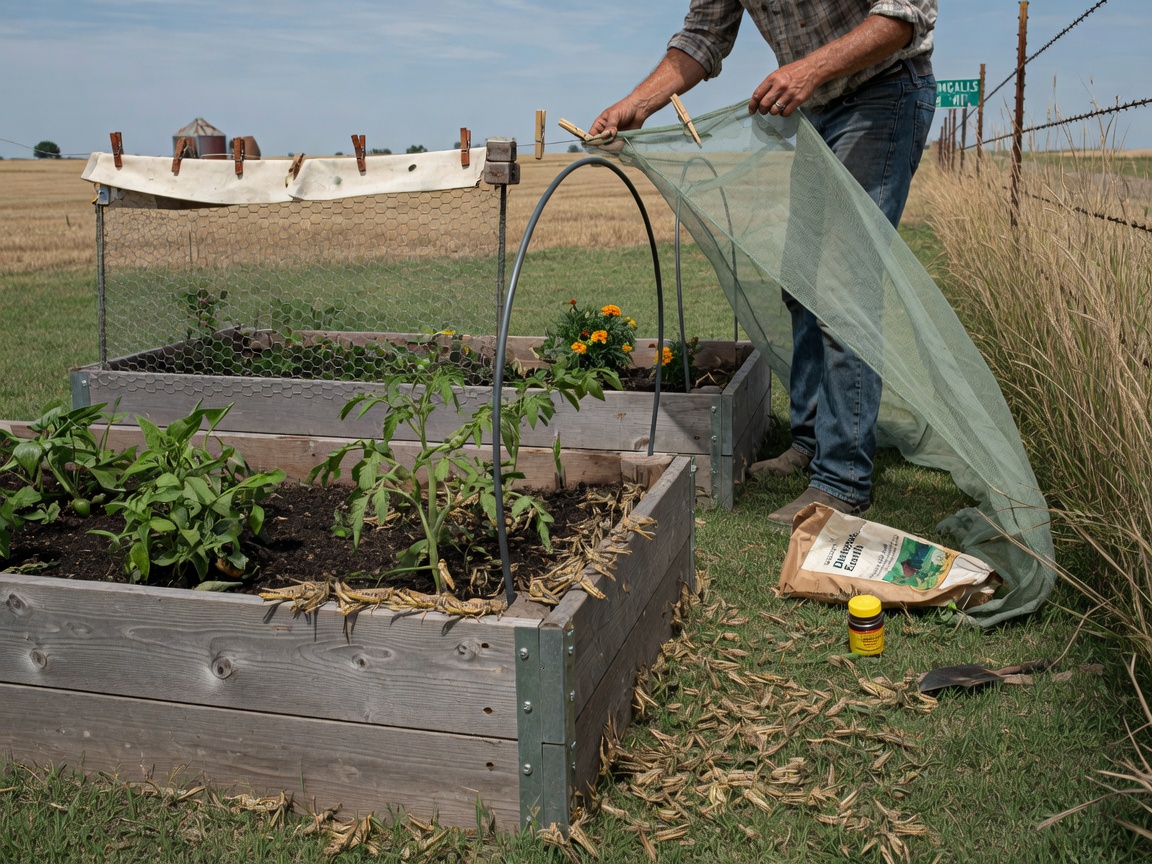
Row covers combined with early-season monitoring stop most grasshopper damage in Ingalls gardens before populations peak. Gardeners who install lightweight fabric barriers over beds in late May see 70-90 percent fewer chewed leaves once nymphs emerge from nearby pastures after the first hot spells.
Grasshopper Life Cycle in Gray County Soil
Grasshoppers in Gray County overwinter as eggs in untilled soil and along fence lines south and west of Ingalls. Eggs hatch in May when soil temperatures reach 60 degrees after spring thunderstorms moisten the ground. Nymphs feed on weeds for two to three weeks before moving into vegetable beds as they grow wings. Hot summers accelerate development, producing two overlapping generations by August, while cold winters reduce egg survival only if temperatures drop below zero for several consecutive nights. Acreage south of Ingalls near Cimarron often serves as the source population because pasture and CRP land provide undisturbed egg-laying sites. Monitoring field edges weekly from mid-April onward lets gardeners predict when pressure will reach garden beds.
Site Preparation Before Spring Planting
Clearing tall weeds within 30 feet of garden beds in March reduces egg-laying spots and forces nymphs to travel farther before reaching vegetables. Turning the top two inches of soil around beds exposes eggs to drying winds and birds. Raised beds lined with 12-inch metal flashing buried six inches deep create a physical barrier that young hoppers rarely cross. Gardeners near 106 Finney Ave report fewer invasions after they also remove volunteer sunflowers and kochia that serve as early food sources. These steps take one afternoon per 400 square feet yet cut later control needs by half in most Ingalls yards.
Row Covers, Traps, and Timed Applications
Floating row covers secured on all sides with soil or bricks provide the most reliable protection from May through July. Remove covers only for pollination on squash and cucumbers during morning hours. Yellow sticky traps placed at bed corners catch winged adults once they appear in late June. When counts exceed five hoppers per square foot, a single application of spinosad bait scattered along bed edges at dusk limits feeding without harming beneficial insects. Reapply after heavy thunderstorms wash material away. These methods work best when started before nymphs reach one-half inch long.
Encouraging Local Predators on Acreage
Bird houses mounted on 8-foot posts attract kestrels and bluebirds that consume hundreds of grasshoppers daily. Leaving strips of unmowed grass 10 feet wide between garden and pasture gives garter snakes and toads daytime cover. Managing Prairie Dog Activity on Acreage South of Ingalls explains how maintaining short vegetation around outbuildings also reduces hiding spots for both rodents and large grasshoppers. Avoid broad insecticides that kill these natural controls.
When Professional Residential Pest Control Helps
Persistent pressure on larger properties often requires targeted perimeter treatments that reach field edges homeowners cannot safely access. Residential pest control crews apply products labeled for grasshoppers along fence lines and ditch banks in early morning when insects are sluggish. Treatments timed to the second hatch in July protect fall gardens such as tomatoes and peppers. Residents in nearby Cimarron can schedule weekday visits between 8am and 5pm. This approach integrates with the cultural steps already in place rather than replacing them.