
2026-08-20 · Mike Thornton
Identifying Spider Species Found in Gray County Basements
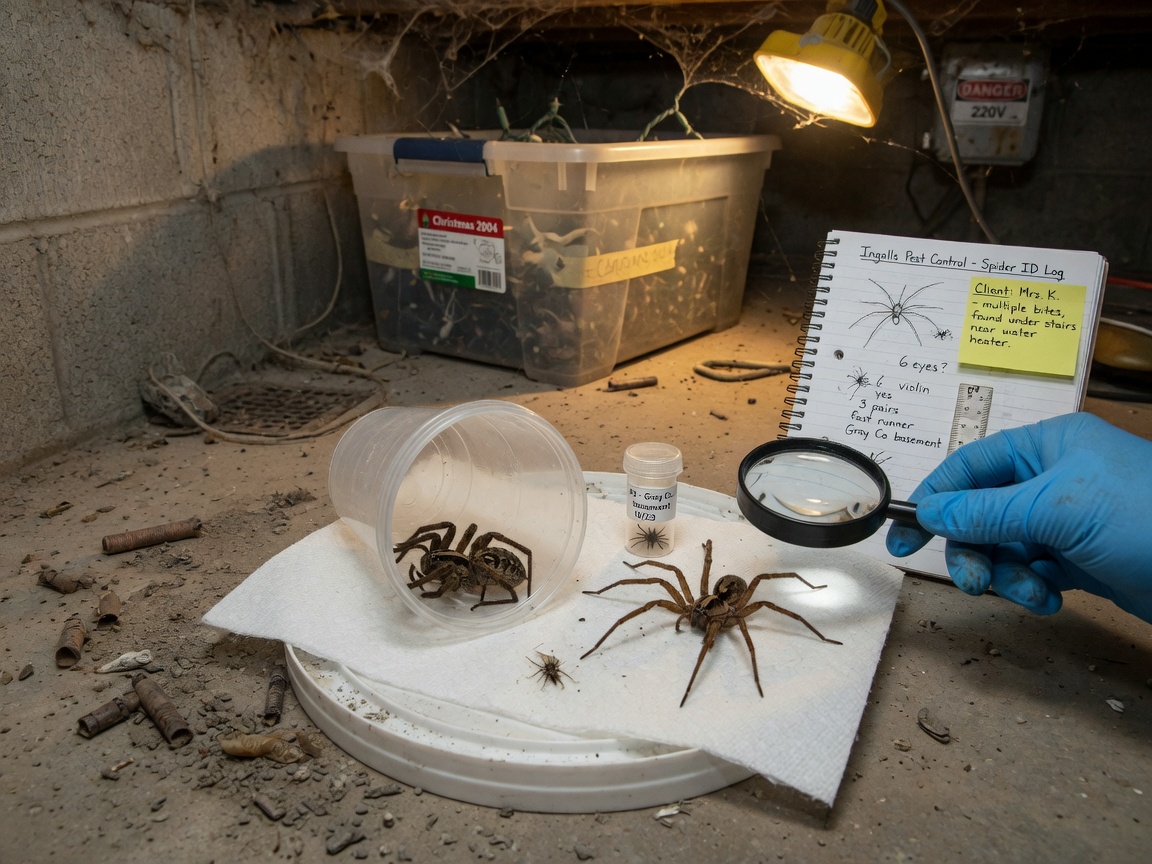
Gray County basements commonly host three spider species that enter homes in Ingalls and nearby Cimarron when thunderstorms increase humidity and winter cold drives them indoors: the southern black widow, the long-bodied cellar spider, and the wolf spider. These spiders seek dark, undisturbed spaces in older concrete foundations and crawl spaces typical of homes built before 1980 throughout the county.
Southern Black Widow Characteristics
Southern black widows appear frequently in Gray County basements because the region's frequent thunderstorms create damp corners where they build irregular webs near floor joists. Females measure about 1.5 inches including legs and display a red hourglass marking on the abdomen underside. They prefer undisturbed areas behind stored boxes or water heaters, where temperatures stay stable during hot summers that reach above 95 degrees and cold winters that drop below freezing. Bites occur mainly when webs are disturbed during storage access, though these spiders rarely leave their webs to hunt. Homeowners in Ingalls notice them more often after heavy spring rains that push insects into lower levels, providing prey. Regular inspection of dark storage zones helps track activity without direct contact.
Long-Bodied Cellar Spider Identification
Long-bodied cellar spiders thrive in Gray County basements due to consistent moisture from thunderstorms and the cool, stable air in homes with older poured-concrete foundations. These spiders feature extremely long, thin legs and small bodies around 0.3 inches, often hanging upside down in loose webs near ceiling corners or pipes. They feed on other small arthropods that enter through foundation cracks common in Ingalls properties built on the area's clay-heavy soils. During hot summers they remain active in shaded lower levels while outdoor temperatures climb, and they survive winter cold by staying indoors. Their webs accumulate dust over months, signaling long-term presence rather than sudden infestation. Residents near Cimarron report similar patterns in utility rooms where plumbing leaks maintain humidity.
Wolf Spider Behavior in Local Basements
Wolf spiders enter Gray County basements during cold winter months and after summer thunderstorms that flood outdoor burrows. These hunting spiders lack webs, measure 0.5 to 1.5 inches, and display distinct eye patterns with two large central eyes. They move quickly across floors in search of crickets and beetles drawn to basement moisture, especially in homes with soil floors or unsealed expansion joints. In Ingalls, they appear more often in properties surrounded by open fields where prey populations rise after rain. Unlike web-building species, wolf spiders may be seen in daylight if disturbed from hiding spots under appliances or along baseboards. Their presence indicates available insect food sources rather than structural issues, though sealing visible cracks reduces entry points during seasonal shifts.
Climate and Housing Factors Driving Spider Entry
Hot summers and cold winters in Gray County force spiders into basements of typical single-story ranch homes and older farmhouses found throughout Ingalls. Thunderstorms deliver sudden moisture that softens soil around foundations, creating small entry gaps, while winter freezes push spiders toward heated indoor spaces. Clay soils common in the region retain water longer than sandy ground, increasing basement humidity that supports prey insects. Homes with crawl spaces rather than full basements see higher activity along sill plates where temperature gradients are sharpest. These patterns differ from nearby Cimarron properties with newer construction that use better sealing methods. Monitoring after storms and during temperature swings reveals consistent entry timing tied directly to weather rather than random occurrence.
Practical Steps After Identification
Once a spider species is identified in a Gray County basement, focus on reducing moisture and sealing gaps rather than widespread treatment. Vacuum visible webs and debris, then store items off floors to eliminate harborage. For persistent activity linked to black widows or wolf spiders, contact a local service such as Spider Control that understands regional conditions. Homeowners in Ingalls can also review What to Expect When Ant Trails Appear in Kitchens After Rain since shared moisture factors affect multiple pests. Properties in surrounding areas like Cimarron benefit from the same targeted approach based on local housing age and soil type. Business hours at 106 Finney Ave, Ingalls, KS 67853 run Monday through Friday from 8am to 5pm for direct scheduling.