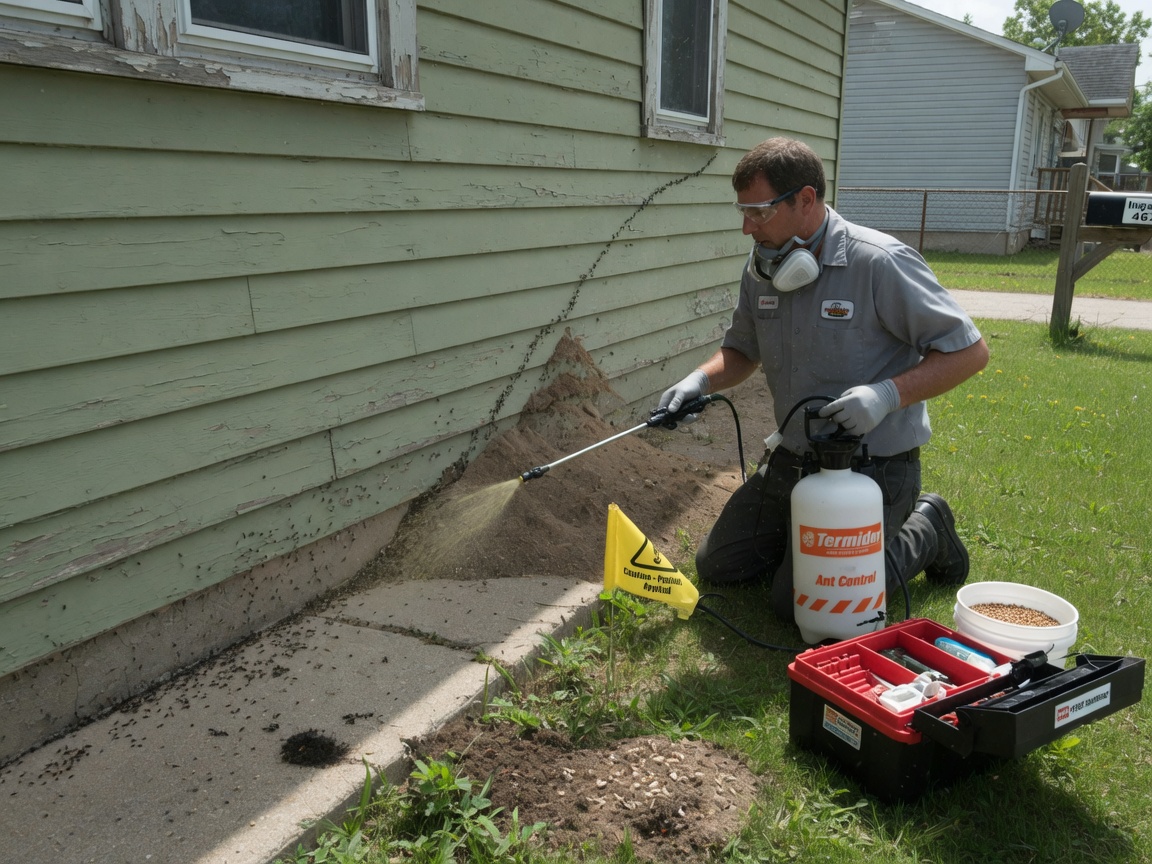
Hot summers and frequent thunderstorms in Gray County push pavement ants and carpenter ants to seek moisture inside older frame homes common along Finney Avenue and side streets in Ingalls. These structures often have settled foundations and wood-to-soil contact that let colonies trail from yards into kitchens and bathrooms once temperatures climb. Treatments must account for the clay-heavy soils that hold water after storms and allow ants to re-enter treated zones quickly.
Cold winters drive surviving colonies deeper into wall voids and crawl spaces of homes built before modern slab standards. In Cimarron and surrounding Gray County areas, residents frequently see renewed activity in early spring when thawing ground reactivates trails. Effective control requires locating satellite nests rather than spraying visible foragers, because missed parent colonies will simply shift routes around treated barriers.
Thunderstorm runoff along drainage ditches near Ingalls can carry ants into basements and utility rooms that lack proper grading. Technicians inspect expansion joints, sill plates, and irrigation lines first, then apply targeted baits that worker ants carry back to the main colony. This method avoids broad spraying that can scatter colonies into neighboring properties during the wet season.
Technician insight
In Ingalls the thing that catches most people out with ant control is the clay soil that holds water after thunderstorms and lets colonies re-enter through the same foundation cracks year after year. Older homes near 106 Finney Ave often have settled grading that funnels runoff straight to sill plates, so treating only the visible trail never reaches the parent nest.
Kitchen Trail After July Storm
Pavement ants entered a single-story home off Main Street following heavy rain that pooled against the east foundation. Inspection found the parent colony under the driveway slab. Bait stations placed along the trail and at the slab edge eliminated activity within ten days without interior spraying.
Ant Control Services We Offer
✓Pavement Ant Elimination
Locates and baits pavement ant colonies that trail from sidewalks and driveways into Ingalls kitchens after summer rains.
✓Carpenter Ant Inspection
Checks older wood-frame homes in Gray County for carpenter ant galleries in moist timbers near roof leaks or foundation contact.
✓Indoor Ant Trail Treatment
Applies non-repellent baits along active trails inside homes to reach hidden nests without scattering colonies.
✓Exterior Perimeter Baiting
Places weather-resistant bait stations around foundations to intercept ants entering from yards during thunderstorm season.
✓Moisture Source Ant Control
Identifies and treats ant activity tied to leaking irrigation or poor drainage common on clay soils around Ingalls properties.
Ant Control Cost in Ingalls, KS
| Service | Typical Range | What Affects It |
|---|---|---|
| Initial Ant Inspection | $75–$125 | Includes mapping trails and identifying species on Ingalls properties. |
| Standard Ant Treatment | $150–$300 | Covers one structure with interior and exterior baiting. |
| Follow-Up Visit | $75–$150 | Adjusts stations after heavy rain or colony movement. |
| Perimeter Bait Stations | $100–$200 | Added when yards border drainage areas common in Gray County. |
Ranges are typical for Ingalls, KS and confirmed with an exact written quote before any work starts.
How it works
- 1
Site Inspection
Walk the property and interior to map trails, locate nests, and note moisture issues from recent storms.
- 2
Species Identification
Confirm whether pavement ants or carpenter ants are present so the correct bait matrix is selected.
- 3
Targeted Application
Place baits and perimeter treatments at entry points and satellite nests rather than broadcast spraying.
- 4
Follow-Up Monitoring
Return within two weeks to check activity and adjust stations if colonies shift after heavy rain.
Pricing
Upfront quotes given on site after inspection; final cost depends on colony size and access.