
2026-08-20 · Mike Thornton
Window and Door Seal Upgrades for Summer Insect Control
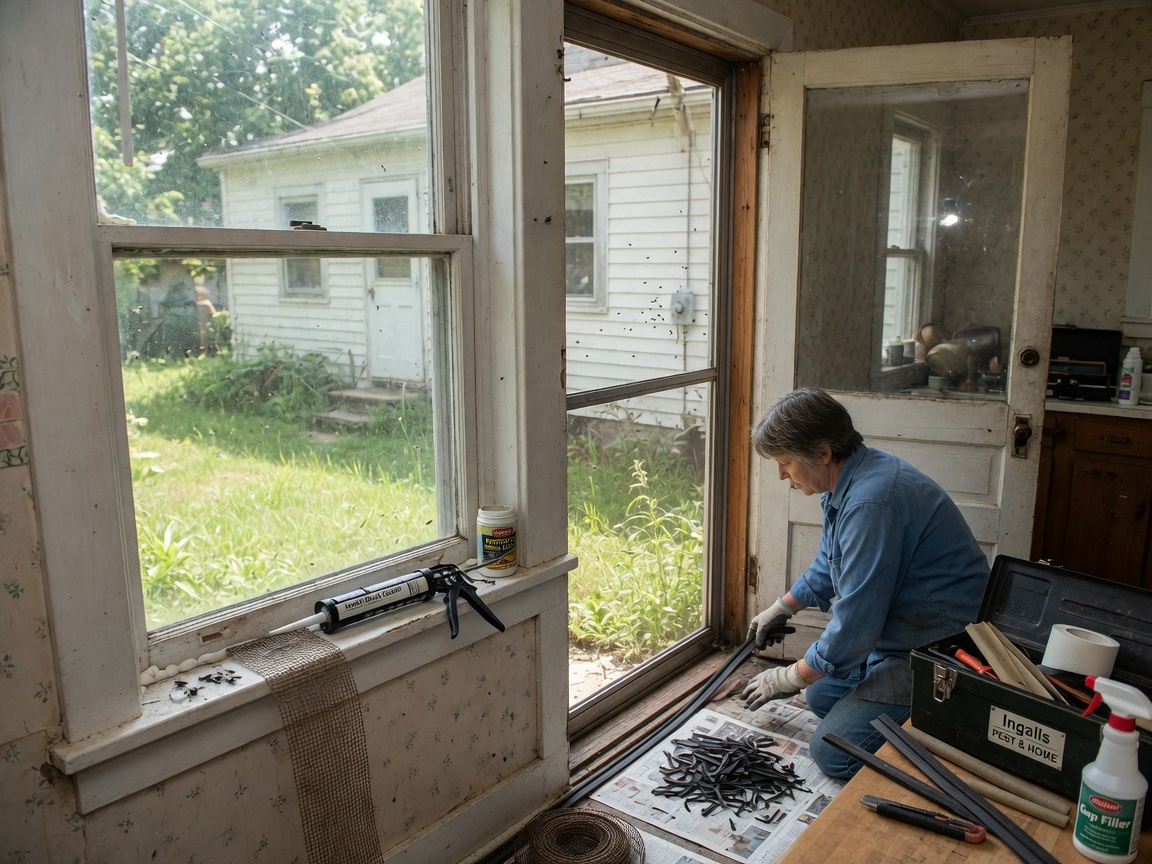
Upgrading weatherstripping and door sweeps on windows and doors cuts insect entry points by addressing gaps common in older Ingalls homes. In Gray County, hot summers and frequent thunderstorms drive ants, spiders, and mosquitoes indoors through even small openings around frames. Proper sealing focuses on compression materials that hold up to temperature swings between daytime heat and evening storms.
Local Climate and Housing Factors
Ingalls homes often feature wood-frame construction from the 1950s through 1980s with single-pane windows and older door frames that shift during cold winters. Hot summers push 90-plus degree days that expand wood and create new gaps, while thunderstorms bring wind-driven rain that forces insects toward shelter. These conditions make standard foam tape fail within two seasons, so residents replace it with rubber or silicone bulb seals rated for exterior use. Properties near open fields see higher spider and ant pressure because the surrounding terrain offers little natural barrier. Sealing work must account for the county's clay-heavy soil that holds moisture after storms and keeps foundations cooler, drawing pests upward at night.
Selecting Materials That Withstand Local Conditions
Choose adhesive-backed rubber weatherstripping for window sashes and vinyl door sweeps with metal backing for bottom gaps. These hold compression through repeated 30-degree daily swings common between July afternoons and overnight cooling. Avoid thin foam products that compress permanently after one thunderstorm season. Measure each opening at three points because older frames in Ingalls often sit out of square by 1/8 inch or more. For sliding patio doors, install a full-length astragal seal along the meeting stile to block mosquitoes that follow moisture trails indoors after evening rains. Materials cost $25–$60 per opening when purchased at regional hardware suppliers serving Gray County.
Step-by-Step Installation Process
Begin by cleaning frames with a stiff brush and removing old adhesive residue so new seals bond directly to wood or metal. Cut weatherstripping to length with 1/4-inch extra at each end for compression fit, then press it into the kerf or against the stop bead. On doors, attach the sweep so the bottom edge contacts the threshold evenly without dragging; test by closing the door on a sheet of paper and checking for drag. Work during morning hours before peak heat to keep adhesive workable. For double-hung windows common in rural Gray County homes, add sash locks that pull the meeting rails tight and reduce the 1/8-inch gap that often appears after winter settling. Finish by running a bead of exterior caulk along the casing where it meets siding to close secondary entry points.
Ongoing Checks and Professional Support
Inspect seals each spring before thunderstorm season begins and again after the first hard freeze. Look for daylight along edges or material that has pulled away from the frame. Homes on larger lots benefit from pairing seal work with ongoing monitoring programs that track seasonal insect patterns. Residents in nearby Cimarron can review similar housing stock details through local service records. When gaps exceed 1/4 inch or frames show rot, combine sealing with residential pest control to address established colonies. For mosquito pressure tied to standing water after storms, add targeted mosquito control alongside the seal upgrades. Properties needing repeated treatments often review cost variables for ongoing pest monitoring on larger lots before scheduling follow-up visits at the Ingalls shop located at 106 Finney Ave.