2026-08-20 · Mike Thornton
Cost Variables for Ongoing Pest Monitoring on Larger Lots
Ongoing pest monitoring on larger lots in Ingalls typically costs $250–$450 per quarterly visit when properties exceed five acres, with total annual ranges of $1,000–$2,200 depending on pest pressure and terrain.
Property Size and Terrain Effects
Larger lots around Ingalls often include open fields, shelterbelts, and older farmstead buildings that increase travel time and inspection points. Properties over ten acres require systematic perimeter sweeps plus interior checks on outbuildings, which adds labor hours compared to standard residential yards. Soil conditions in Gray County, with its mix of sandy loam and heavier clays, create variable rodent burrowing patterns that demand extra time to map active runs. Thunderstorms common in summer can wash away bait stations or open new entry points along fence lines, requiring follow-up adjustments on each visit. These factors directly scale monitoring time and therefore price.
Seasonal Weather Patterns in Gray County
Hot summers accelerate insect breeding cycles while cold winters drive rodents indoors once temperatures drop below freezing. Frequent thunderstorms during spring and fall create moisture that attracts ants and cockroaches into foundation cracks on larger lots. Monitoring schedules must account for these shifts; a single heavy rain event can double the number of active sites that need checking. Properties near Cimarron often see earlier harvest-related rodent influxes that extend into late fall, pushing some visits from quarterly to monthly during peak pressure. Adjusting frequency based on these local weather realities keeps costs predictable rather than reactive.
Common Pests and Monitoring Intensity
Rodents remain the primary concern on Ingalls acreage because of nearby grain storage and harvest activity. How Harvest Season Increases Rodent Pressure on Ingalls Properties outlines how field mice move toward structures once combines finish. Subterranean termites also appear in older farm homes, so quarterly checks often include soil probes along foundations. Spider and ant activity spikes after storms, requiring targeted gel placements rather than blanket treatments. Each pest type adds distinct inspection steps that affect visit duration and material use.
Service Frequency and Add-On Decisions
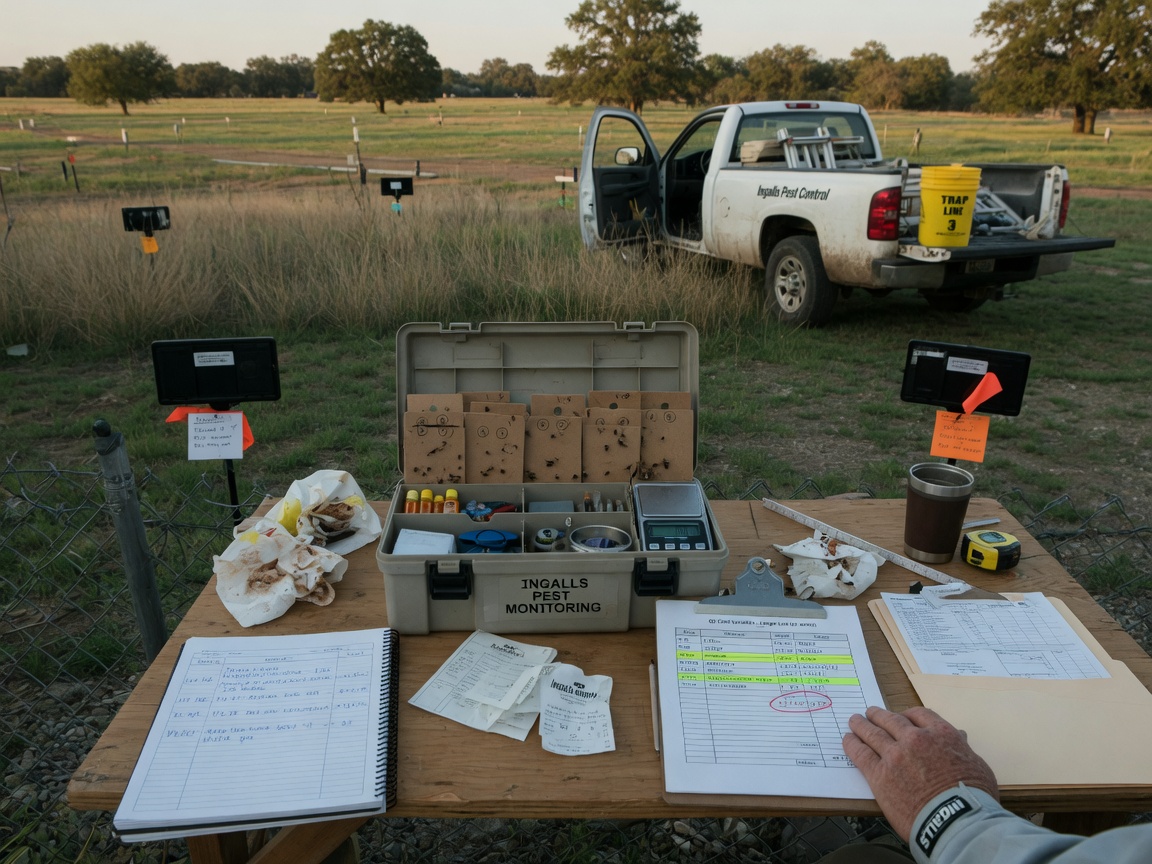
Most larger lots in Gray County start with quarterly visits but shift to bi-monthly during harvest or after major weather events. Residential Pest Control programs allow property owners to add targeted Rodent Control stations when activity increases. Documentation of each visit includes maps of stations and findings so owners can track trends over multiple seasons. Upfront quotes based on a site walk-through prevent surprise charges when lot conditions differ from initial estimates.
Practical Record-Keeping for Budget Planning
Keeping simple logs of pest sightings between visits helps refine future schedules and avoid unnecessary calls. Owners in Ingalls who note new burrows or insect clusters after storms can request focused follow-ups instead of full re-inspections. This approach, combined with consistent quarterly monitoring, typically stabilizes annual costs within the $1,000–$2,200 range even on ten-plus-acre parcels.