
2026-08-20 · Mike Thornton
Managing Prairie Dog Activity on Acreage South of Ingalls
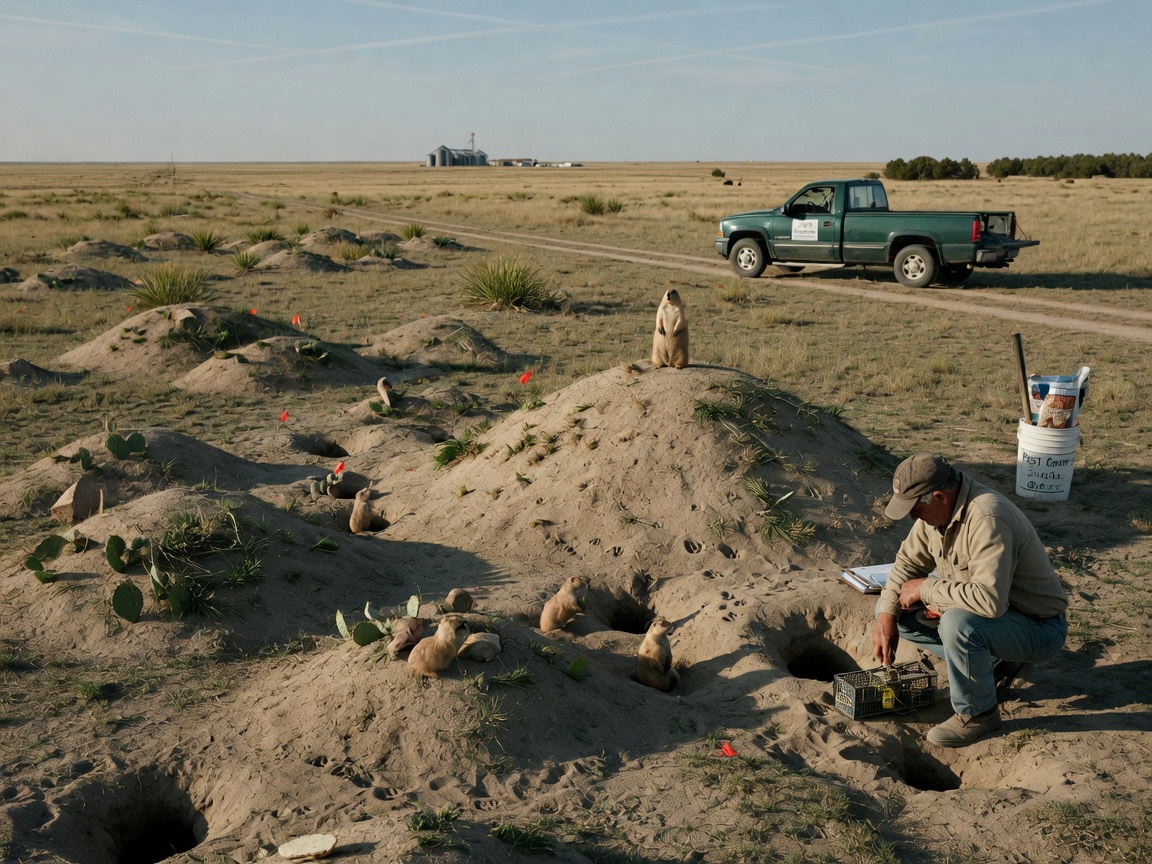
Managing prairie dog activity on acreage south of Ingalls starts with mapping active burrows within the first 48 hours of sighting, followed by a mix of habitat changes and targeted removal that accounts for the flat, sandy soils common in southern Gray County.
Spotting Early Colony Signs on Rural Land
Acreage south of Ingalls often shows fresh dirt mounds 6–12 inches high near fence lines or irrigation ditches within days of prairie dog arrival. Watch for clipped vegetation in 10–20 foot circles and multiple entrance holes spaced 15–30 feet apart. These patterns differ from gopher work because prairie dogs maintain larger, interconnected tunnels that survive frequent thunderstorms. Regular walks along property edges after heavy rain reveal new activity before colonies reach 20–30 animals. Track sightings on a simple map to focus efforts where tunnels intersect with crop edges or pasture.
Climate and Soil Factors That Change the Job
Hot summers in Gray County dry out surface soil and push prairie dogs deeper, making surface traps less effective after July. Cold winters with temperatures below freezing drive them to use deeper chambers, so exclusion work performed in November lasts longer than spring attempts. Thunderstorms erode burrow entrances and create new weak points in fences, allowing quick recolonization from neighboring land toward Cimarron. Sandy loam common south of Ingalls collapses easily during heavy rain, which can bury traps or fill in filled holes overnight. Operators adjust timing to early morning or late evening in summer and use heavier backfill material during winter repairs.
Practical Steps for Acreage Control
Begin by removing food sources such as tall grass and spilled grain within 50 feet of known burrows. Install 4-foot welded-wire barriers buried 12 inches at the base along property lines shared with untreated land. Use live traps baited with peanut butter and oats placed at active entrances for 3–5 days, checking twice daily. Fill inactive holes with a 50/50 sand and gravel mix compacted in 6-inch layers to discourage reuse. Re-inspect every 10 days for 6 weeks after initial work because surviving animals often reopen tunnels after the first thunderstorm. For larger colonies, coordinate with adjacent owners to prevent immediate return from untreated sections.
When Professional Wildlife Support Fits
Properties larger than 40 acres south of Ingalls benefit from Wildlife Nuisance Animal Control once colonies exceed 15 active burrows, especially when tunnels threaten irrigation lines or building foundations. Technicians combine exclusion with follow-up monitoring that matches the area’s seasonal weather shifts. Rodent Control crews also handle cases where prairie dogs overlap with other burrowing pests near older farm structures. Homeowners who combine these visits with the prevention steps above typically see sustained reduction rather than repeated outbreaks each spring.
Ongoing Prevention Around Ingalls Properties
Maintain a 20-foot mowed buffer along all fence lines and around water tanks to limit new colony starts. Check and repair wire barriers after every major storm, as wind-driven rain loosens soil around posts. Keep grain storage sealed and clean up spills within 24 hours. These habits reduce the chance of reinvasion from surrounding prairie in Gray County. For readers dealing with related issues in older buildings, see Sealing Attics Against Bats in Older Ingalls Farmhouses for complementary exclusion techniques that apply to outbuildings on the same acreage.