
2026-08-20 · Mike Thornton
Preventing Raccoon Entry Into Outbuildings During Cold Months
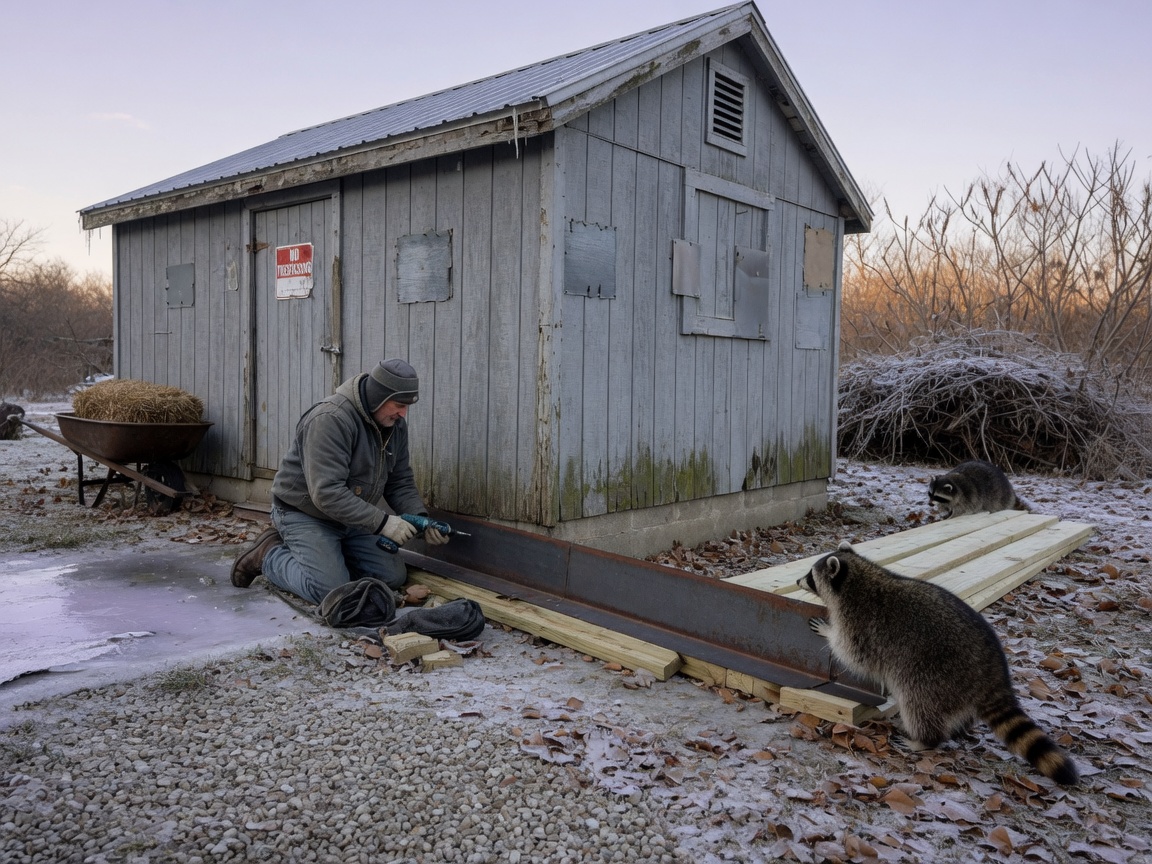
Raccoons in Ingalls and surrounding Gray County farms enter outbuildings when overnight lows fall below freezing, so the direct solution is sealing every opening larger than 4 inches and reinforcing doors before the first hard freeze hits.
Inspecting Outbuildings for Raccoon Access
Walk the perimeter of every shed, barn, and grain bin on your property in Ingalls during daylight hours while raccoons remain inactive. Look for claw marks on siding, loose metal flashing, and gaps where pipes or wiring enter walls. In older farm outbuildings common around Ingalls and Cimarron, check where foundation meets siding because soil shifts from summer thunderstorms create new openings each year. Pay special attention to doors that sag or fail to close tightly; raccoons can push through gaps as small as 5 inches. Note any chewed edges on wood trim or torn screens, which indicate prior attempts at entry. Repeat this check after every major wind event because cold fronts often bring gusts that loosen panels.
Sealing Gaps and Entry Points
Use 1/2-inch hardware cloth or 16-gauge steel mesh to cover vents and holes once you confirm no animals are inside. Overlap mesh by at least 6 inches and secure it with screws rather than staples so raccoons cannot peel it away. For larger openings around doors, install metal threshold plates and add self-closing hinges rated for 50-pound pressure. In Gray County where winters bring repeated freeze-thaw cycles, apply exterior-grade caulk only after temperatures stabilize above 40 degrees to ensure proper adhesion. Replace damaged soffit panels on outbuildings with solid wood or metal instead of lightweight plastic that raccoons tear through quickly.
Securing Doors and Windows
Install heavy-duty hasps and padlocks on all outbuilding doors, choosing models with 1/4-inch thick shackles that resist chewing. Add 2x4 bracing across double doors to prevent them from being forced apart. On windows, replace broken panes with plywood backed by metal mesh rather than relying on glass alone. Around Ingalls farmsteads, raccoons often climb to second-story hayloft doors, so add sliding bolts at the top and bottom of these entries. Check that window screens sit flush against frames and repair any tears before cold weather sets in.
Using Deterrents and Monitoring
Place motion-activated lights near entry points because raccoons avoid sudden bright areas when foraging at night. Scatter ammonia-soaked rags in corners only as a temporary measure since rain quickly dilutes the scent during Gray County winter storms. Check traps or cameras weekly rather than daily to avoid disturbing the animals unnecessarily. If you find fresh tracks in snow around an outbuilding near Cimarron, revisit the sealing steps immediately rather than waiting for spring.
When Professional Help Is Needed
Contact Wildlife Nuisance Animal Control if raccoons have already taken up residence or if entry points sit more than 10 feet high on older structures common in Ingalls. Technicians can safely remove animals and then perform permanent exclusion work that matches local building styles. Homeowners in nearby areas such as Cimarron, KS often combine this service with Sealing Attics Against Bats in Older Ingalls Farmhouses because the same access routes serve multiple species. Schedule visits between 8am and 5pm Monday through Friday at 106 Finney Ave, Ingalls, KS 67853 to align with seasonal preparation windows.