
2026-08-20 · Mike Thornton
How Harvest Season Increases Rodent Pressure on Ingalls Properties
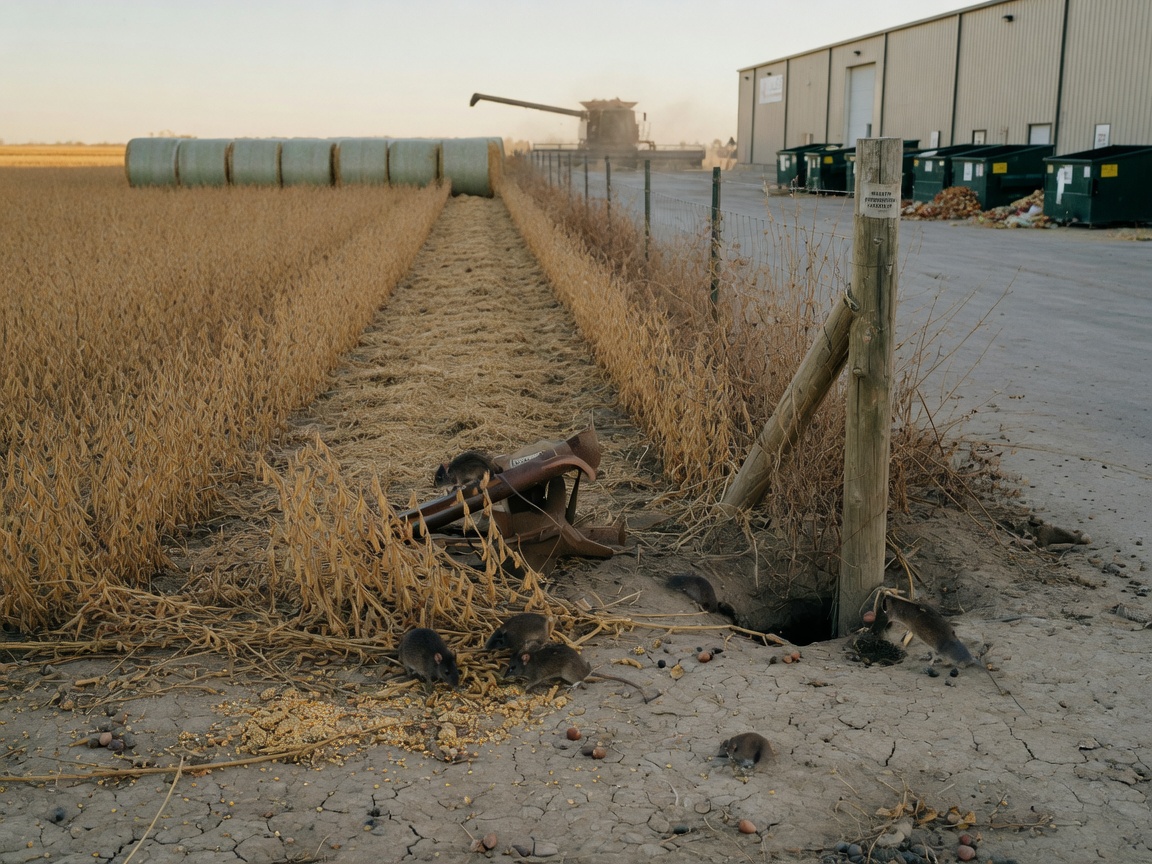
Harvest season in Gray County removes standing wheat and other crops that normally shelter and feed rodents, driving house mice and deer mice from fields into Ingalls homes, barns, and grain bins at rates two to three times higher than non-harvest months.
Field Cover Loss and Rodent Movement
Wheat harvest around Ingalls and nearby Cimarron strips away the dense cover that keeps rodents in open fields. Once combines clear the stalks, mice lose both protection from predators and a steady supply of spilled grain. They travel along fence lines and irrigation ditches toward the nearest structures, often covering several hundred yards in a single night. Properties on acreage south of Ingalls see the sharpest increase because they sit directly adjacent to large cultivated tracts. Older outbuildings with dirt floors and unsealed foundations offer immediate shelter once the rodents arrive. The shift happens quickly after the first cutting, usually within seven to ten days of the combines finishing a section.
Local Weather and Seasonal Timing
Hot summers in Gray County dry out remaining field residue and push rodents to seek cooler, moister indoor spaces. Frequent thunderstorms during harvest can flood shallow burrows, forcing mice to move even sooner. As temperatures drop toward the first cold nights in October and November, the same rodents that entered after harvest now settle in for winter inside wall voids and attic insulation. This creates sustained pressure on Ingalls properties through the entire cold season rather than a brief spike. Homeowners notice the most activity on the north and east sides of houses where wind-driven rain and snow create additional entry gaps.
Common Entry Points in Ingalls Construction
Many Ingalls farmhouses and outbuildings built before 1970 have gaps around sill plates, utility penetrations, and loose soffits that measure one-quarter inch or larger—exactly the size house mice need. Grain bins and feed storage sheds often have corroded metal seams at ground level that allow easy access after harvest. Residents in the original town grid near Finney Avenue report mice entering through dryer vents and crawl-space doors that sit close to harvested fields. Sealing these openings before harvest reduces the number of rodents that establish indoors, but gaps missed during summer often become active routes once temperatures fall.
Monitoring and Early Response
Check along baseboards and in pantries for fresh droppings the size of rice grains starting two weeks after local wheat harvest ends. Look for gnaw marks on stored feed bags and insulation pulled from wall cavities in garages. Properties near Cimarron report similar patterns, confirming the regional nature of the post-harvest influx. Early trapping along runways prevents breeding colonies from forming before winter sets in. Consistent checks every three to four days during the first month after harvest catch most new arrivals before they reach the main living areas.
Practical Steps for Gray County Properties
Store all grain and pet food in sealed metal containers rather than original bags once harvest begins. Trim vegetation within three feet of foundations to remove travel cover. Install door sweeps rated for one-eighth-inch gaps on every exterior door. For ongoing issues, targeted Rodent Control addresses both the immediate population and the entry points that harvest pressure exploits. Readers managing stored grain on nearby acreage may also find value in Keeping Stored Grain Free of Weevils in Small Farm Bins for integrated storage protection.