
2026-08-20 · Mike Thornton
Dealing With Boxelder Bugs on Maple Trees in Town
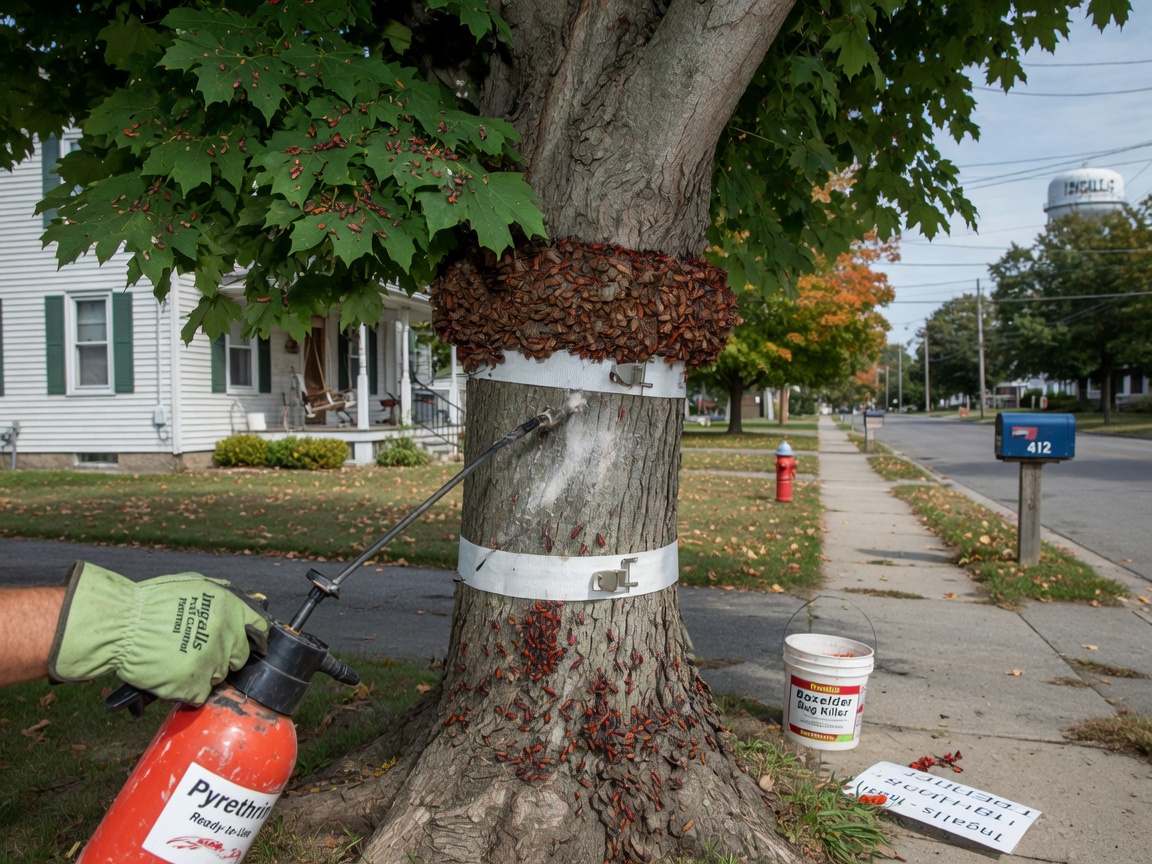
Boxelder bugs appear on maple trees in Ingalls when temperatures drop after summer thunderstorms, drawing them toward south-facing sides of homes and maples for warmth. Homeowners see the greatest activity in late fall as bugs seek overwintering spots in bark crevices and nearby structures, with clusters forming on trunks and branches of mature maples common along streets in town.
Recognizing Boxelder Bug Behavior in Gray County
Boxelder bugs feed on maple seeds and sap without causing lasting tree damage in most cases around Ingalls. They move in response to the shift from hot summers to cold winters, using the frequent thunderstorms as a cue to seek shelter. In Gray County, older housing stock with mature maples planted decades ago provides ideal conditions because these trees often stand close to foundations and outbuildings. Watch for the 1/2-inch black and red insects gathering in groups rather than scattering individually. This pattern differs from other pests that might appear on garden beds near Ingalls.
Residents notice increased sightings after heavy rains because moisture drives bugs higher onto trunks. Maple trees in Ingalls typically show activity on the lower 6–8 feet of trunk where seeds collect. The bugs do not bite but leave small stains on siding when crushed, a common complaint in neighborhoods with maples near windows.
How Local Weather Affects Boxelder Bug Movement
Hot summers in Gray County keep boxelder bug populations active longer into fall, while cold winters push them toward protected sites on maples and homes. Thunderstorms create temporary moisture that encourages bugs to climb rather than remain on the ground. These cycles mean homeowners in Ingalls see the heaviest clusters after the first cold snap following September rains. Trees planted in open yards experience less pressure than those next to heated walls, a pattern repeated across town and nearby Cimarron.
Soil conditions in the county, often dry between storms, limit ground cover options and funnel bugs upward onto maples. This weather-driven movement explains why problems concentrate on the south and west sides of properties where afternoon sun warms the bark. Understanding these patterns helps time any response before bugs enter wall voids.
Steps for Managing Bugs on Maple Trees
Start by raking fallen maple seeds from under trees in Ingalls to reduce the food source that attracts boxelder bugs. Seal gaps around windows and doors on homes near maples to limit entry points during cold months. A strong stream of water from a hose can dislodge clusters from lower trunks without chemicals, though results last only until the next warm day.
Remove volunteer boxelder seedlings that sprout near maples because they serve as additional hosts. In neighborhoods with older homes, trimming low branches reduces direct contact between trees and siding. These steps address the issue at the source rather than relying on repeated treatments. For persistent clusters inside structures, Residential Pest Control offers targeted options suited to Gray County conditions.
Connecting Tree Pests to Broader Yard Management
Boxelder bugs on maples often appear alongside other insects that affect gardens and outbuildings in Ingalls. Similar weather patterns that drive bugs toward trees also influence grasshopper pressure on garden beds near Ingalls. Keeping maples healthy through proper watering during dry spells between thunderstorms reduces stress that can draw more insects. Homeowners who monitor both trees and surrounding vegetation see fewer surprises each season.